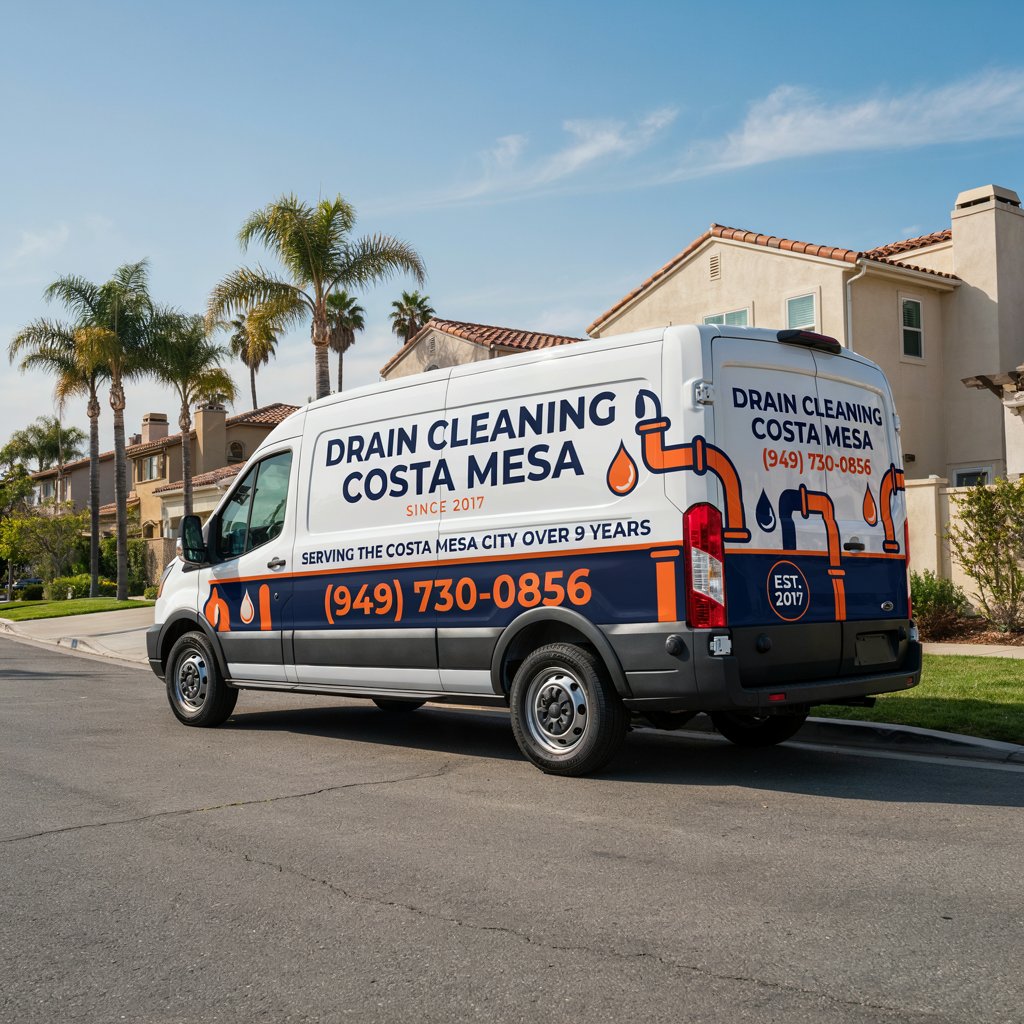
Grease Interceptor Cleaning in Costa Mesa, CA
Scheduled pump-truck service for large underground and outdoor interceptors, built around your kitchen's hours, not ours.
Professional Grease Interceptor Cleaning For Costa Mesa Kitchens
A grease interceptor is not a bigger version of the trap sitting under a break-room sink. It's a large precast concrete or fiberglass tank, typically installed underground in the parking lot or utility yard, or in an outdoor enclosure adjacent to the building, and plumbed inline to capture wastewater from an entire high-volume kitchen before it reaches the sewer lateral. If your facility runs a full-service restaurant, a food hall with multiple tenants, or an institutional kitchen serving hundreds of meals a day, code almost certainly requires an interceptor sized well beyond what a point-of-use trap can handle.
For facilities managers, the operational stakes are different from a small kitchen too. An interceptor failure doesn't mean a slow sink — it means a saturated main line, a sewage backup into a dish room or dining area, or a call from the sanitation district after a grease discharge violation. None of those are quiet problems, and none of them are cheap to clean up after the fact compared to keeping the unit on a proactive pumping schedule.
We service interceptors with a vacuum pump truck rather than a hand crew and a shop-vac. That means full evacuation of accumulated fats, oils, grease, and settled solids from every baffle chamber, not just a skim off the top. After pumping, we clean the interior walls and baffles, inspect fittings, risers, and access lids for wear or damage, and check that inlet and outlet tees are seated correctly — small things that, left unchecked, turn into an emergency call during a Friday dinner rush.
Costa Mesa's sanitation requirements follow the standard 25% rule: once accumulated grease and solids reach a quarter of the interceptor's liquid depth, the unit is due for pumping regardless of the calendar date. High-volume kitchens hit that threshold faster than lower-volume operations, which is why we track your facility's actual accumulation rate over a few service cycles and build a realistic schedule around it — monthly for some kitchens, quarterly for others — instead of guessing.
Every pump-out includes signed, licensed waste-hauling manifest documentation, itemized by volume and disposal location, so your compliance file is ready the moment a health inspector or sanitation district auditor asks for it. That paperwork discipline is one of the clearest ways an interceptor differs from a smaller grease trap: regulators expect a documented chain of custody for waste removed from a code-mandated unit at this scale, and we build that into every visit as a matter of course.
Whether you're managing one location or overseeing interceptor service across several Costa Mesa properties, the goal is the same: keep the unit ahead of the 25% threshold so pumping stays a routine line item instead of an emergency dispatch. If you're not sure where your current schedule stands or whether your unit is even sized correctly for your kitchen's volume, our grease management specialists can review your service history and set a schedule that actually matches how your facility runs. You'll get that same attention to detail from Costa Mesa drain cleaning specialists on every call.
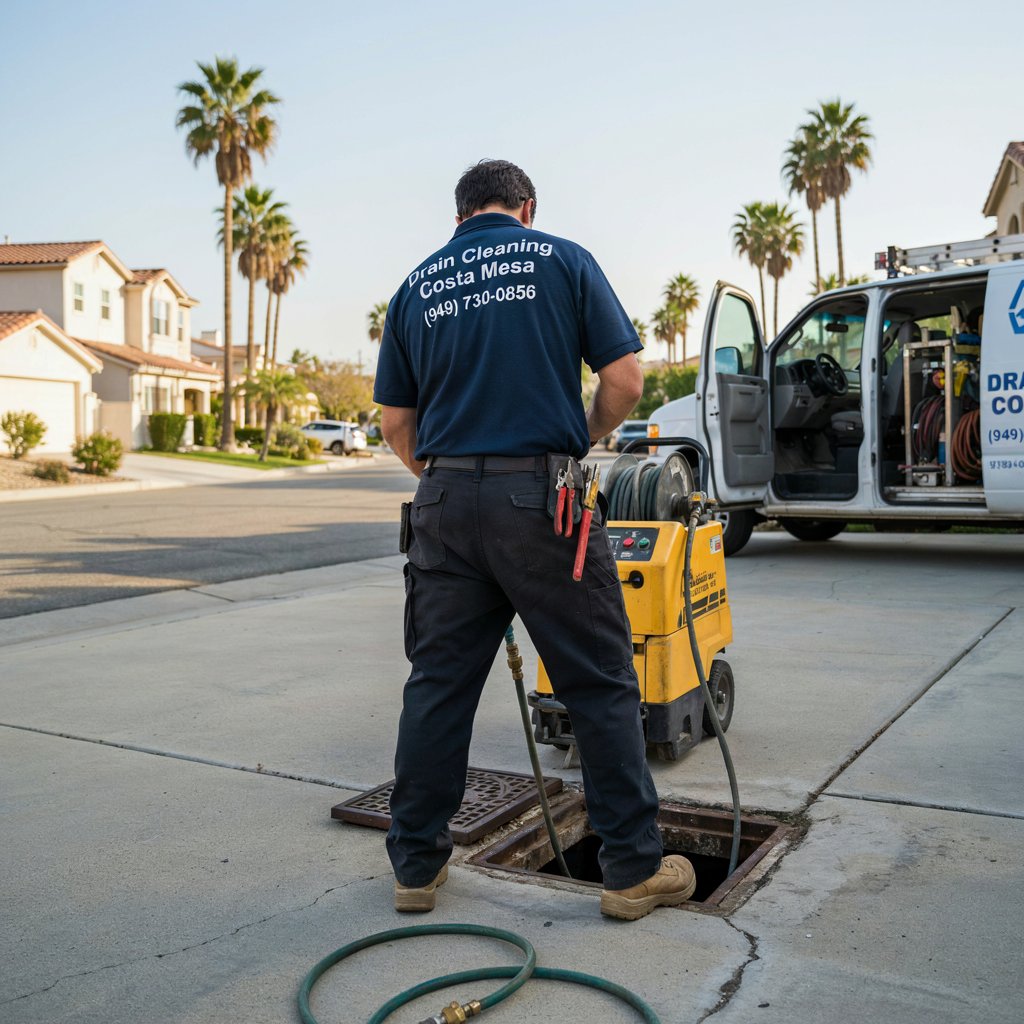
Our Process for Grease Interceptor Cleaning
A vacuum truck arrives on a scheduled window, and every visit follows the same four steps so your kitchen team knows exactly what to expect and how long the crew will be on site. It's the same process you can count on from our drain cleaning technicians on every call.
Pump the Interceptor
The truck's vacuum hose fully evacuates fats, oils, grease, and settled solids from every baffle chamber, not just the surface layer, down to the tank floor.
Clean the Unit
Interior walls, baffles, and outlet tees are scraped and rinsed clean so the next accumulation cycle starts from an empty, accurately measurable baseline.
Inspect for Wear
We check access lids, risers, and fittings for cracking or corrosion, and confirm inlet/outlet tees are seated correctly before closing the unit back up.
Provide Manifests
You receive a signed hauling manifest documenting volume removed and disposal location, filed and ready for your next health department or sanitation district review.
Cost Of Grease Interceptor Cleaning In Costa Mesa
Interceptor pricing scales with tank size and access, not with the size of the mess — a unit on a proactive schedule costs less over a year than one that's only called after it backs up.
| Service | Typical Price Range |
|---|---|
| Underground Interceptor Pumping (Standard, 500–1,000 gal) | $395 – $875 |
| Recurring Scheduled Service (Per Visit) | $325 – $695 |
| Large-Capacity / High-Volume Interceptor (1,500+ gal) | $650 – $1,450 |
| Emergency Same-Day Pump-Out | $525 – $975 |
Final pricing is confirmed after we know your tank's rated capacity and truck access — quotes are given before any work begins, no surprises on the invoice.
What drives the range: tank capacity, how far the truck has to run hose to reach the unit, how many chambers need to be pumped, and how much grease and solids have accumulated since the last service. Kitchens on a locked-in recurring schedule generally land at the lower end because there's simply less to remove per visit.
Every price above includes full evacuation of the unit, interior cleaning of walls and baffles, a fitting and lid inspection, and signed waste manifest documentation for your records — there's no separate line item for the paperwork.
Recurring accounts get locked-in pricing and priority scheduling, which is generally the more cost-effective route for any kitchen running enough volume to require an interceptor in the first place.
Signs Your Grease Interceptor Needs Service
These are the warning signs facilities teams tell us they wish they'd acted on sooner, before the unit forced an unscheduled shutdown. Not sure which applies to you? Reach out to the team at Drain Cleaning Costa Mesa for a quick answer.
A Persistent Odor Near the Interceptor
A sour, rotten-egg smell around an outdoor access lid or nearby drain usually means accumulated grease has already climbed well past the 25% threshold.
Kitchen Drains Slowing Down
When multiple fixtures across the kitchen drain slowly at once, rather than just one sink, the interceptor itself is often the bottleneck, not the individual line.
No Recent Pumping on Record
If you can't produce a manifest for the last service date on request, that's a compliance gap as much as a maintenance one, and an inspection is overdue.
Rising Kitchen Volume
A schedule set two years ago rarely still fits a kitchen that's added a catering line or extended hours; higher throughput fills the unit faster than it used to.
Customer Reviews
We manage interceptors across three properties and they're the only vendor who's kept every one of them on schedule without a single missed pump-out. The manifests come back organized and ready for our compliance file every time.
Our old vendor only showed up after we called them, usually mid-backup. This crew set a real recurring schedule and we haven't had an odor complaint or a slow drain since. Worth switching for the peace of mind alone.
They flagged that our unit was undersized for the volume we'd grown into before it ever caused a problem, then walked us through the fix. That's the kind of catch that saves a kitchen a shutdown, not just a service call.
Why Choose Drain Cleaning Costa Mesa
Local & Family-Owned
Based right here at 351 W Bay St since 2017, we know Costa Mesa's sanitation district requirements firsthand and schedule around real kitchen hours, not a call center's routing software.
Upfront, Flat-Rate Pricing
You get a quote based on your tank's actual capacity and access before the truck arrives, with manifest documentation built into the price, not billed separately after the fact.
Modern Equipment
Our vacuum trucks handle full-capacity underground and outdoor interceptors in one visit, with hose reach to service units set well back from a curb or loading area.
Guaranteed Workmanship
Every pump-out, inspection, and manifest is backed by our workmanship guarantee, so a compliance deadline or an audit request never catches you without documentation.
Grease Interceptor Cleaning FAQs
Straight answers to what Costa Mesa facilities managers ask most before booking interceptor service.
What's the difference between an interceptor and a grease trap?
A grease trap is a small point-of-use unit, often 20 to 50 gallons, installed under or near a single sink to serve a small kitchen. A grease interceptor is a much larger unit, typically 500 to several thousand gallons, installed underground or outdoors and plumbed to serve an entire high-volume kitchen's wastewater line. Interceptors require pump-truck service, not a hand-scoop, and are the code-required unit for larger operations.
How often does a grease interceptor need pumping?
Most Costa Mesa interceptors need pumping every 60 to 90 days, though high-volume operations like large restaurants and food halls often need monthly service. Local sanitation district rules require pumping once accumulated grease and solids reach 25% of the unit's liquid depth. We track your facility's accumulation rate over a few cycles and set a fixed schedule so you're never guessing.
How much does grease interceptor cleaning cost?
Standard pumping on a mid-size underground interceptor typically runs $395 to $875 per visit, with recurring scheduled service priced lower per visit than one-off calls. Large-capacity units and emergency same-day service run higher. Final pricing depends on tank size, accessibility, and how much grease and solids have accumulated since the last pump-out.
Do you provide waste manifests?
Yes. Every pump-out includes signed, licensed waste-hauling manifest documentation showing volume removed, disposal location, and service date, ready to hand over for a health department or sanitation district audit. We keep a copy on file so you can pull your service history at any time.
How is an interceptor different from a grease trap physically?
Physically, interceptors are large precast concrete or fiberglass tanks installed underground or in an outdoor enclosure, with multiple baffle chambers that give grease and solids a longer retention time to separate from the water. Grease traps are small steel or plastic boxes that sit indoors under or near a sink. Servicing an interceptor requires a vacuum pump truck; a trap can be serviced by hand in minutes.
What size interceptor does our facility need?
Sizing follows Uniform Plumbing Code tables based on your kitchen's flow rate, meal counts, and number of connected fixtures such as prep sinks, dishwashers, and floor drains. Higher meal volumes and more fixtures require a larger unit. We assess your kitchen's actual service volume and cross-check it against your current unit's rated capacity to confirm it's still sized correctly as your business has grown.
Can an undersized interceptor cause ongoing problems?
Yes. An undersized unit reaches the 25% accumulation threshold quickly, forcing more frequent pump-outs than your budget accounts for, and it's more prone to grease carryover into the sewer lateral, which can trigger sanitation district violations and backups. If your pumping frequency keeps climbing even with steady kitchen volume, we check whether the unit itself is undersized for your operation.
How long does pumping take?
Most standard underground interceptor pump-outs take 45 to 90 minutes depending on tank size and truck access. We schedule around your slower operating hours or early morning windows so the crew is off site before service ramps up, and larger or harder-to-access units are quoted with a realistic time estimate up front.
Is this covered by a guarantee?
Yes. Every interceptor pump-out and cleaning is backed by our workmanship guarantee. If an issue traces back to how the service was performed, we return and correct it at no charge. We also stand behind the accuracy of our manifest documentation for your compliance records.
Get Your Interceptor on a Reliable Schedule.
A properly maintained grease interceptor is one less compliance headache for your kitchen. Call (949) 730-0856 to schedule a pump-out or set up a recurring service plan built around your volume.
Drain Cleaning Services in Costa Mesa
Residential
- ✓ Clogged Drain Clearing
- ✓ Drain Snaking
- ✓ Hydro Jetting
- ✓ Video Camera Drain Inspection
- ✓ Root Removal
- ✓ Sewer Line Cleaning
- ✓ Bathroom Drain Cleaning
- ✓ Kitchen Drain Cleaning
- ✓ Toilet Drain Cleaning
- ✓ Laundry Drain Cleaning
- ✓ Basement Drain Cleaning
- ✓ Roof Drain Cleaning
- ✓ Downspout Drain Cleaning
- ✓ Preventative Drain Maintenance
- ✓ Emergency Drain Cleaning
- ✓ Drain Odor Diagnosis and Removal
- ✓ Slow Drain Diagnosis and Repair
- ✓ Vent Stack Cleaning
- ✓ Water Leak Detection
- ✓ Floor Drain Cleaning
Commercial
Where We're Based
Based at 351 W Bay St in Costa Mesa, CA. Our pump trucks regularly service restaurants, food halls, and institutional kitchens throughout Costa Mesa and the surrounding Orange County area.